Asking price vs sold price: check the evidence before you decide
A nearby sold price is evidence to investigate, not proof of what another home should cost. Build a comparable-sales sheet from Land Registry records and keep the unknowns visible.
Drafted with AI assistance, edited and fact-checked by the TrueDeed team. No named specialist has signed this off yet.
General information, not legal, financial, tax or surveying advice. Check the primary sources linked in the article, and take advice from a qualified professional for your own situation.
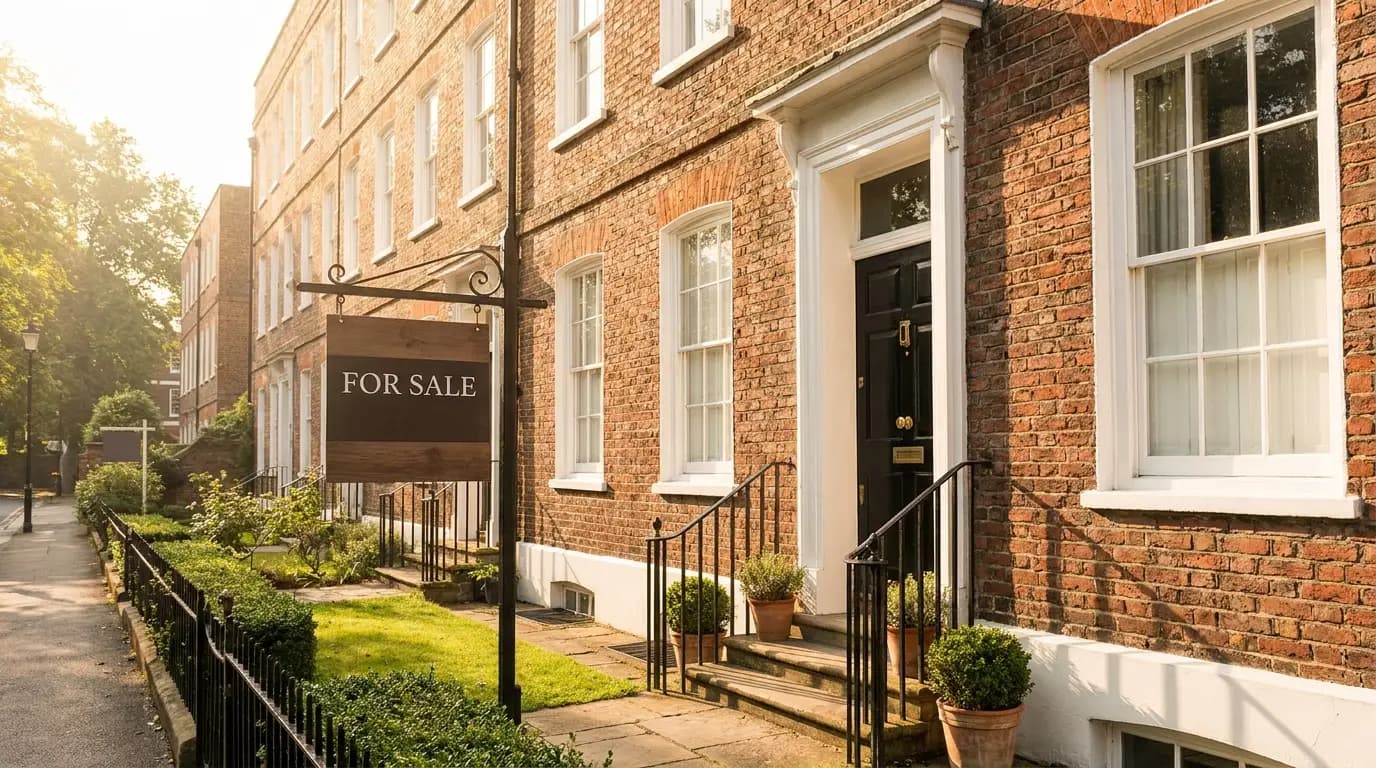
An asking price is the seller's advertised figure. A sold price in HM Land Registry's Price Paid Data is the price recorded on a completed sale's transfer deed. Comparing them can help you question a price, but only if the homes and transactions provide a useful comparison.
Start with completed sales, record the differences you can verify, and keep the unknowns visible. A nearby sale is evidence to investigate, not proof of what another home should cost.
England and Wales. Sources checked 4 November 2026. General information, not a property valuation.
Asking, agreed and completed prices are different
- Asking price: the seller's current advertised price. You still need to establish whether a buyer will agree to it and whether the transaction will complete.
- Under offer or sold subject to contract: the seller has accepted an offer. You still need the eventual completion price and whether the sale will proceed.
- Land Registry sold price: the price stated on the transfer deed for the recorded transaction. You still need to establish whether that property is comparable and what has changed since its sale.
The GOV.UK buying guide describes “under offer” and “sold subject to contract” as an accepted offer before exchange, rather than a legally binding purchase. Do not enter either status in your worksheet as a completed sale.
Keep current listings in a separate section. They help you see what sellers are asking today; they do not establish what buyers have paid.
What Land Registry records, and what it does not
HM Land Registry's Price Paid Data covers property sales in England and Wales submitted for registration. Its published fields give you a starting point for selecting comparable sales. They do not describe a property's full specification.
- Price and date of transfer: the sale price stated on the deed and the completion date. Neither tells you the original asking price or when negotiations took place.
- Address and postcode: identify the building and, where recorded, the separate flat. The postcode is the one used at the time of the transaction; later changes are not reflected.
- Property type: detached, semi-detached, terraced, flat/maisonette or other. Bungalows have no separate category, and end terraces sit within terraced.
- Old/new flag: newly built or established property. It does not describe refurbishment or present condition.
- Duration: freehold or leasehold classification. It does not give the remaining lease term, service-charge detail or repair liability, and leases of 7 years or less are not recorded.
- PPD category: standard or additional price-paid entry. Category B groups several transaction types and does not identify each one separately.
The dataset does not include floor area, bedrooms, extension details, condition or asking-price history. Find separate evidence for those details and record its source. An old listing may help, but it describes the property at that time and may contain measurement or description errors.
Coverage also has limits. HM Land Registry's exclusions include sales not yet lodged for registration, gifts, Right to Buy sales at a discount and share transfers such as those between parties on divorce. A missing result does not prove that no sale occurred. Use the official exclusions list rather than assuming that every change of ownership appears.
Build a comparable-sales evidence sheet
First describe the property you are assessing: address, asking price and date checked, property type, tenure, and any size or condition information you can substantiate. Mark unverified details as unverified.
Then choose the search area and date range before selecting sales. Start with homes whose location and characteristics resemble the subject property. A shared postcode alone is too little: a flat and a detached house can sit close together while serving different buyers.
Set up a spreadsheet with one row for each candidate sale and these columns:
- Record identity: address, flat or unit identifier and transaction reference where available.
- Source: record URL or dataset name, and the date you retrieved it.
- Transaction: completed sale price and transfer date.
- Basic match: property type, tenure, old/new flag and PPD category.
- Location fit: same street or local market? Note material differences you can identify.
- Size evidence: floor area, measurement source and date; otherwise “unknown”.
- Condition evidence: relevant report or dated description; otherwise “unknown”.
- Other differences: lease length, alterations, parking or outdoor space, with sources.
- Decision: include, background only, or exclude, with the reason.
- Unresolved question: what needs checking, with whom, and by when.
Do not fill gaps with assumptions. A renovated kitchen in a photograph does not establish the condition of a roof, and a freehold/leasehold flag does not settle the legal terms of a lease.
Keep an exclusion log
Keep rejected candidates on a second sheet with four columns: the record reference, your decision (exclude or background only), the verified mismatch or unresolved issue behind it, and the document or clarification that could change the decision.
Use the log to check whether you are rejecting sales because their prices disagree with your preferred answer.
If you find little suitable evidence, say so. Expand one filter at a time and record the change. An older sale in a comparable street may deserve investigation, but widening the search until enough results appear does not make those results relevant. Ask a local agent or qualified valuer how they would handle the evidence gap.
Recent completed sales may still be missing
The transfer date is the completion date stated on the deed. It is not the date HM Land Registry publishes the record.
HM Land Registry says the interval between sale and registration typically ranges from two weeks to two months, and is occasionally longer. It warns that data for the two most recent months is incomplete and does not indicate final monthly volumes.
That matters when you inspect a quiet-looking recent period. Few recorded transactions may reflect reporting delay; they are not enough to establish a sudden fall in local demand.
Monthly downloads contain transactions received during that month, including changes or deletions to previous data. They are not a clean list of everything that completed in that month. When we checked, the downloads page showed a 28 October 2026 update with September datasets.
Save your retrieval date and refresh the evidence before relying on it for a decision. If you maintain your own dataset, account for corrections and deletions rather than appending every monthly row as another sale.
Compare without inventing precision
Read the strongest matches first. Ask which differences you have evidence for, which remain uncertain, and whether those uncertainties could change your conclusion.
An index adjustment can offer market context, but it does not inspect the property or verify its condition. Keep any adjusted estimate separate from the recorded transaction price, with the index, dates and method identified. Do not describe an adjusted figure as a sale that happened.
Price per square metre also needs compatible floor-area measurements. Price Paid Data supplies no floor area, so the calculation depends on another source. If you cannot establish comparable measurements, leave the calculation out.
Avoid turning a gap between the asking price and a selected average into an automatic discount. The sale dates, property differences and choice of records all affect that comparison. Repair quotations can inform a discussion about condition, but they do not establish a matching reduction in market value.
Use the worksheet to prepare questions. If you need a formal valuation for a transaction or another defined purpose, agree that instruction with an appropriately qualified valuer rather than treating a consumer comparison as one.
Questions to take to your agent or surveyor
- Which completed sales support the asking price, and why are they comparable?
- Which nearby sales have you excluded, and on what evidence?
- Which size, condition and tenure details still need verification?
- Could missing recent transactions change the picture?
- Does the price discussion depend on repairs or investigations that remain unresolved?
- Do I need a separate valuation, and what would its scope be?
Before making an offer or setting a price, keep the evidence sheet alongside those answers.
TrueDeed is invite-only. Joining the waitlist does not create an account or provide immediate access.
Join the early-access waitlistDrafted with AI assistance, edited and fact-checked by the TrueDeed team. No named specialist has signed this off yet.
Related articles

Your survey found problems: can you renegotiate or pull out in England and Wales?
Builder's price gone up since the quote? Quote versus estimate, and what to check before you pay